Overview
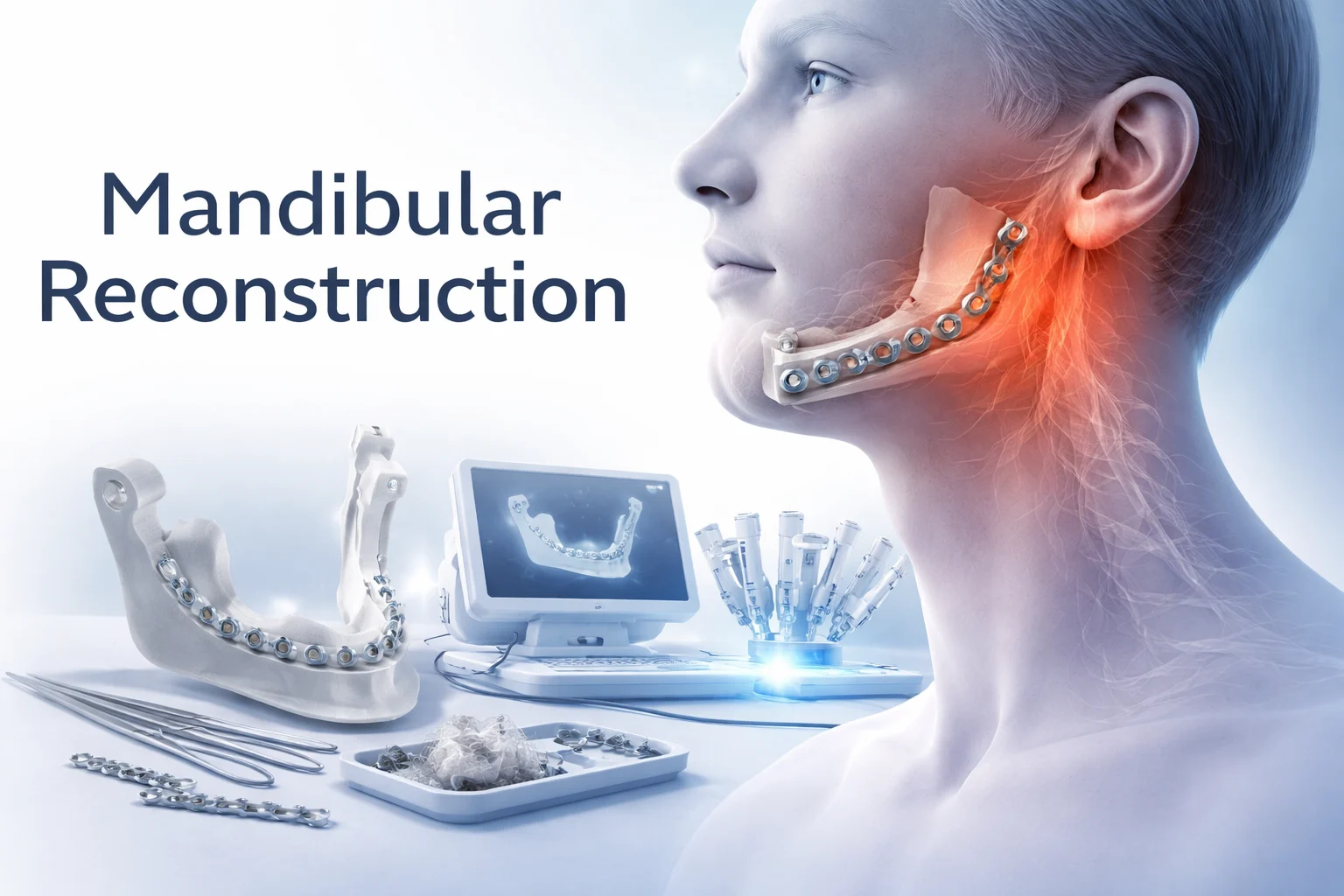
Mandibular Reconstruction is an advanced surgical procedure performed to restore the shape, function, and strength of the lower jaw (mandible) after damage caused by cancer, trauma, infection, or congenital defects. The mandible plays a critical role in essential functions such as chewing, speaking, breathing, and maintaining facial symmetry, making its reconstruction both functionally and aesthetically important.
This complex procedure often involves the use of bone grafts or microvascular free flap techniques, where tissue from another part of the body (such as the fibula) is transferred to rebuild the jaw. Dr. Chaitra Shetty specialises in state-of-the-art mandibular reconstruction techniques, ensuring precise restoration of jaw structure while preserving nerve function and facial appearance.
With advancements in surgical planning, 3D imaging, and microvascular techniques, patients can achieve excellent functional and cosmetic outcomes. Personalized treatment planning ensures optimal recovery, improved oral function, and enhanced quality of life.
What is Mandibular Reconstruction?
Mandibular Reconstruction is a surgical procedure aimed at rebuilding the lower jaw using bone, soft tissue, and sometimes skin grafts. It is commonly required after tumor removal surgeries (such as oral cancer), severe facial trauma, or conditions that lead to bone loss in the jaw.
One of the most advanced methods used is microvascular free flap reconstruction, where bone along with its blood supply is transplanted from areas like the fibula (leg bone) to reconstruct the mandible. This technique allows for better integration, strength, and long-term functionality.
The procedure not only restores the structural integrity of the jaw but also improves the patient’s ability to eat, speak, and maintain facial balance. In many cases, dental rehabilitation using implants can also be performed after reconstruction to restore full oral function.
- Jaw reconstruction after oral cancer surgery
- Microvascular free flap reconstruction (Fibula flap)
- Reconstruction after trauma or fractures
- Correction of congenital jaw defects
- Jaw restoration with dental rehabilitation options
When is Mandibular Reconstruction Needed?
- Loss of jaw bone due to cancer removal
- Severe facial trauma or accidents
- Infections causing bone damage
- Difficulty in chewing or speaking due to jaw defects
- Facial asymmetry or deformity
- Congenital jaw abnormalities
- Post-surgical defects requiring reconstruction