Overview
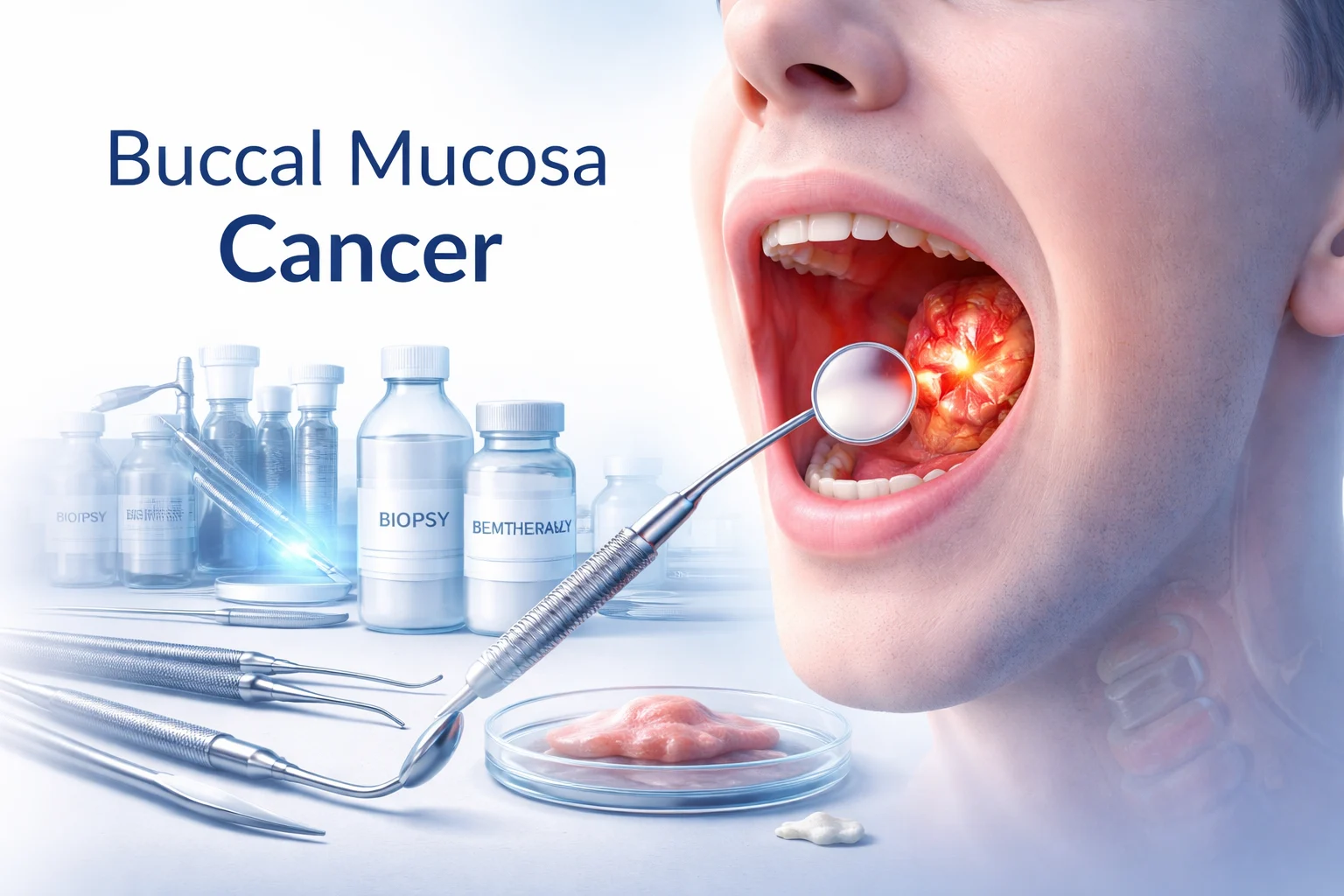
Buccal Mucosa Cancer is a type of oral cancer that develops in the inner lining of the cheeks (buccal mucosa). It is one of the most common forms of oral cancer in India, largely associated with the use of tobacco products such as gutka, paan, and smoking. This cancer can significantly affect essential functions like chewing, speaking, and facial movement if not diagnosed and treated early.
The disease often begins as a small ulcer, thickened patch, or lesion inside the cheek that does not heal over time. As it progresses, it may invade deeper tissues, including muscles and bones of the jaw. Dr. Chaitra Shetty specialises in comprehensive management of buccal mucosa cancer, offering advanced surgical treatment along with reconstruction to restore both function and facial appearance.
With early detection and modern surgical techniques, buccal mucosa cancer can be treated effectively. Personalized treatment planning ensures complete removal of the tumor while minimizing functional loss and improving the patient’s quality of life.
What is Buccal Mucosa Cancer?
Buccal Mucosa Cancer refers to malignant growth arising from the inner lining of the cheeks. Most cases are squamous cell carcinomas that develop due to long-term irritation from tobacco, betel nut chewing, alcohol consumption, or poor oral hygiene.
This cancer may initially appear as a painless ulcer or patch but can gradually increase in size and invade surrounding tissues. In advanced stages, it may involve the jawbone, skin, or nearby lymph nodes in the neck.
Treatment typically involves surgical removal of the tumor, often combined with reconstructive procedures to restore oral function and facial structure. Depending on the stage, additional treatments such as radiation therapy or chemotherapy may be required.
- Inner cheek (buccal mucosa) cancer
- Squamous cell carcinoma of oral cavity
- Tobacco-related oral cancers
- Advanced buccal tumors with jaw involvement
- Reconstruction after tumor excision
Symptoms
- Non-healing ulcer inside the cheek
- Red or white patches in the mouth
- Pain or difficulty while chewing
- Swelling in the cheek or face
- Difficulty in opening the mouth (trismus)
- Bleeding from the affected area
- Lump in the neck (lymph node involvement)